
Inbound Marketing for Logistics Companies
F5 builds inbound marketing for logistics companies: we earn the attention of shippers and procurement teams with content about the lanes, services and problems they search, then turn that traffic into quote requests with forms, CRM workflows and nurturing.

10+ years of logistics SEO
We took an online freight forwarder to 1M organic visits a month before its acquisition by Agility.
Logistics companies we work with



Quick answer
What is inbound marketing for logistics companies?
Inbound marketing for logistics companies means earning the attention of shippers and procurement heads through helpful, industry-specific content instead of relying only on cold calls or trade shows. It covers SEO keyword clusters around transport modes, verticals and geographies, dock-level content about detention, demurrage and customs, a page for every service and location, and a CRM that nurtures each inquiry until it becomes a contract.
Inbound only works when traffic exists first, so we start with visibility in Google, Bing and AI assistants, then build the conversion and nurturing system on top of it.
- Team experience
- 10+ years of logistics SEO and marketing, from iContainers (2016) to F5
- Best for
- Freight forwarders, 3PLs and warehousing, freight brokers, carriers, customs brokers, logistics SaaS
- Core pieces
- SEO and AI search, content, quote forms, CRM workflows, lead scoring, nurturing
- CRMs we work in
- HubSpot, Salesforce, Zoho and the CRM you already pay for
- Measured on
- Quote requests, sales-qualified leads and contracts traced to the first visit
- Languages
- English and Spanish
Benefits
Benefits of inbound marketing for logistics companies
-
Shippers who are already looking
Inbound brings procurement managers and shippers who are researching a lane, service or problem right now, so conversations start warmer than cold outreach.
-
10+ years of logistics SEO and marketing
The team behind F5 has run logistics marketing since 2016, when Oriol Lampreave joined iContainers and built the inbound engine that reached one million organic visits a month before the acquisition by Agility Logistics. Iván Tintoré has worked in logistics technology since co-founding iContainers in 2008.
-
Content your operations team barely edits
Dock-level guides on detention, demurrage, customs and Incoterms, written by people who know the operation, reviewed in under an hour a month.
-
A CRM that turns inquiries into contracts
Lead scoring by lane, shipper size and urgency, and nurturing built for 90-day-plus freight sales cycles, in HubSpot or Salesforce.
-
Proof from logistics companies
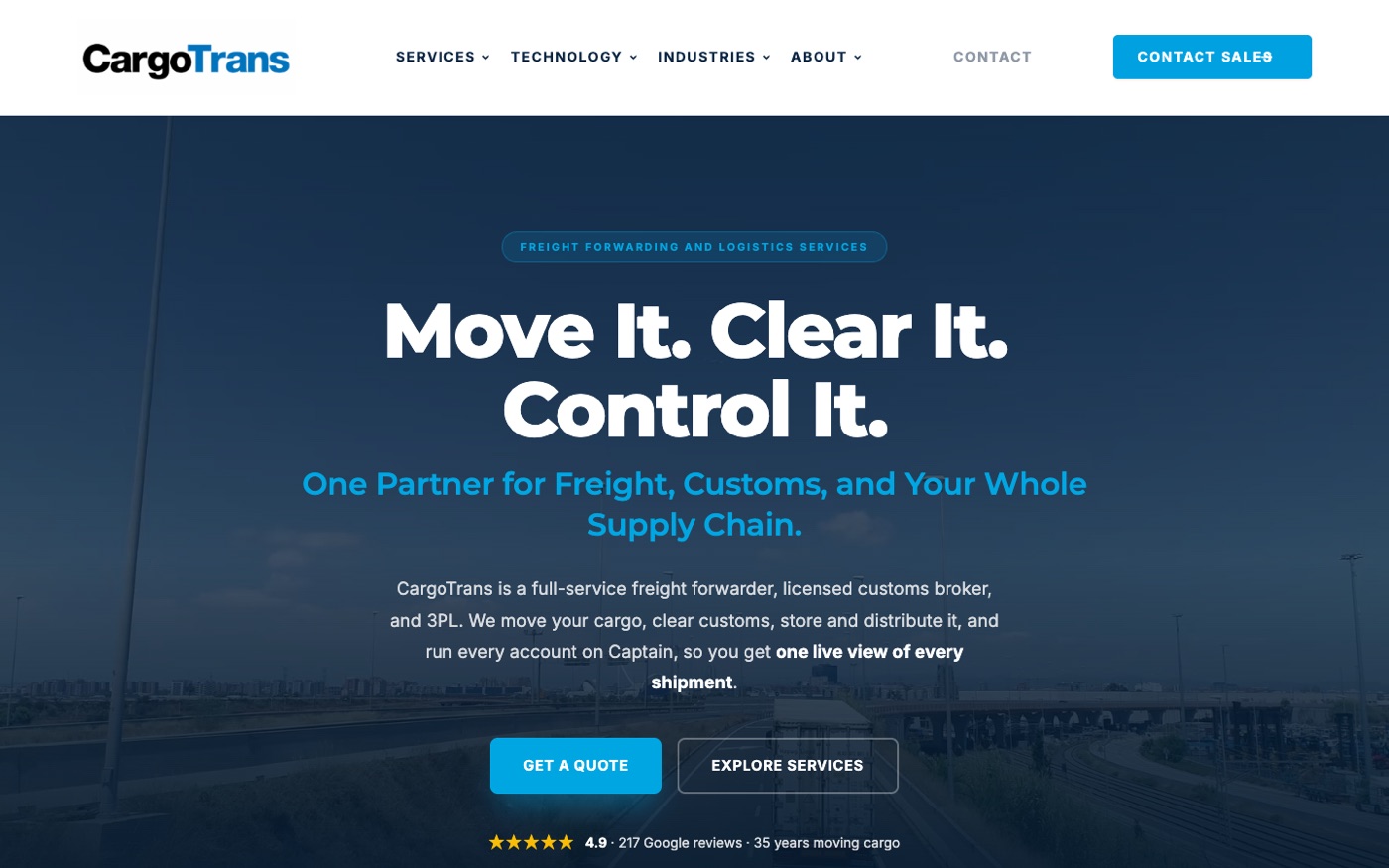
Interworld Freight, a Miami forwarder, went from referrals to 60 to 80 inbound leads a day. F5 has worked with more than 60 logistics companies and generated more than 5,000 qualified leads for them.
-
Best fit for logistics companies with a website and services buyers research before calling. Not a fit if you need booked loads next week: start with outbound.
Get my free audit
How many of your website visitors ever ask for a quote?
We audit your traffic, content, forms and CRM and show where shippers drop off and what to fix first.
What's included
What inbound marketing for logistics includes
- 01
Traffic first
SEO and AI search for the lanes, services and locations you sell, because inbound without traffic is a brochure.
- 02
Dock-level content
Guides on real pain points: detention and demurrage, dock scheduling, Incoterms, customs and capacity.
- 03
Conversion paths
Service and location pages with proof, quote forms and calls to action matched to each buying stage.
- 04
CRM setup and workflows
HubSpot or Salesforce pipelines, lead routing, lifecycle stages and alerts for sales.
- 05
Lead scoring and nurturing
Scoring by shipper size, lane and urgency, and email sequences for long B2B sales cycles.
- 06
Closed-loop reporting
Which pages, guides and campaigns produce quote requests and contracts, not only traffic.
- SEO keyword clusters by transport mode, vertical and geography ("LTL carrier", "pharma 3PL", "Dallas warehouse space")
- Dock-level content on detention fees, demurrage, dock scheduling and customs rules
- A dedicated page per service, vertical and warehouse location, with equipment, certifications and capacity
- Operations managers posting real insights on LinkedIn
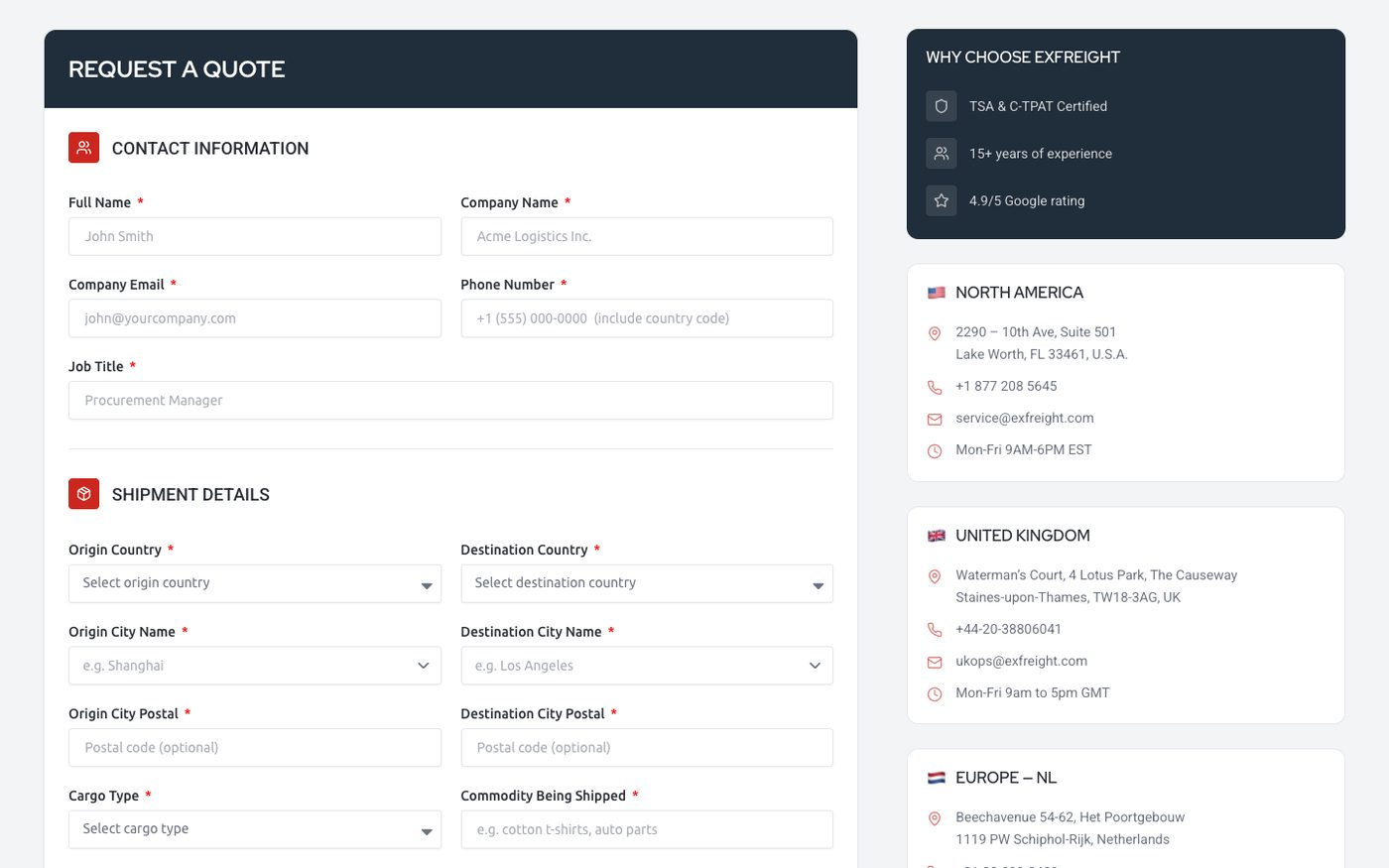
- Quote forms that ask for lane, volume and timing, routed to the right rep
- Lead scoring by shipper size, lane and urgency
- Nurturing sequences by buying stage for 90-day-plus sales cycles
- Reporting from first visit to signed contract in HubSpot or Salesforce
How it works
How long inbound marketing takes, step by step
- Weeks 1–2
Audit
Traffic, content, forms and CRM reviewed, with drop-off points and quick fixes.
- Month 1
Plan
Keyword clusters, content calendar, conversion paths and the CRM pipeline.
- Months 2–6
Publish and nurture
Pages and guides every month, workflows and sequences live, scoring tuned with sales.
- Every month
Measure
Quote requests, sales-qualified leads and contracts by page and campaign.
Content strategy
The inbound content that brings logistics companies quote requests
Generic supply chain overviews attract students and competitors. The content that converts answers a buyer’s operational question and leads to a service page.
- 01
Lane and service pages
Example topics: "China to LA ocean freight", "Dallas warehouse space", "pharma 3PL"
Leads to: A quote form for that lane or service
Buyer stage: Decision
- 02
Dock-level guides
Example topics: "how to avoid demurrage", "detention fees explained", "dock scheduling best practices"
Leads to: The service that removes that problem
Buyer stage: Problem aware
- 03
Compliance explainers
Example topics: "Incoterms DDP vs DAP", "ISF filing", "new tariff on steel imports"
Leads to: Customs or forwarding services
Buyer stage: Research
- 04
Comparisons and checklists
Example topics: "how to choose a 3PL", "asset-based carrier vs broker", "RFQ checklist"
Leads to: Your proof and case studies
Buyer stage: Shortlisting
- 05
Case studies and data
Example topics: Transit time data, on-time rates, before-and-after projects
Leads to: A sales conversation
Buyer stage: Evaluation
Want the content plan for your lanes and services?
Get my free inbound auditCase study
Inbound marketing results: Interworld Freight
Interworld Freight: from referrals to 60–80 inbound leads a day

- Miami, FL
- International freight forwarder
- Caribbean and Bahamas lanes
A strong operation on Caribbean and Bahamas routes out of Miami, but a website with no organic traffic and no lead capture. New clients came through relationships, so growth had a ceiling.
A rebuilt, technically sound website; SEO aimed at shippers moving cargo to Caribbean destinations; and lead capture designed around how a freight buyer decides.
60 to 80 inbound leads a day. The website is now Interworld's primary business development channel, running 24/7 without a sales team behind it.
- 1Mmonthly visits at iContainers
- +5,000qualified leads for clients
- +60logistics companies

"F5 rebuilt our website page by page, put a form on every service page so we know where each lead comes from, and they understand tariffs and trade compliance well enough to write about it."
Compare
A logistics inbound agency, a HubSpot agency or in-house?
Short answer: A HubSpot partner agency sets up the software well but rarely knows freight; an in-house marketer knows the company but builds alone. A logistics inbound agency brings the industry content and the CRM system together.
| F5 | Generalist HubSpot agency | In-house marketer | |
|---|---|---|---|
| Content shippers recognize as expert | Written by people who sold freight | Generic B2B content | Yes, if there is time |
| SEO and AI search to bring traffic first | Built in | Often an add-on | Rarely |
| CRM workflows, scoring and nurturing | Yes | Their strength | Depends on the hire |
| Lead scoring by lane, shipper size and urgency | Yes | Generic scoring | Rarely |
| Reporting to contracts, not only leads | Yes | Often to MQLs | Depends on the CRM |
Pricing
How much inbound marketing costs for a logistics company
Inbound marketing is priced as a monthly program that depends on content volume, the CRM work needed and how much traffic already exists. F5 quotes after the free inbound audit and a 30-minute call.
Get a scope and priceWhat changes the price
- Pages and guides published per month
- CRM setup, workflows and integrations
- SEO work needed to bring traffic first
- Languages and markets
Monthly programs and projects, scoped to you. Every page, account and report we create is yours.
By industry
Inbound marketing for each type of logistics company
The content that brings quote requests depends on who your buyer is.
-
Inbound for freight forwarders
Lane pages and import guides that bring importers already planning a shipment.
Freight forwarders -
Inbound for 3PLs
Location, integration and capability pages for brands comparing fulfillment providers.
3PLs and fulfillment -
Inbound for freight brokers
Niche content by lane, equipment or commodity that shippers trust.
Freight brokers -
Inbound for trucking companies
Lane, equipment and service-area pages plus a separate driver path.
Trucking and drayage -
Inbound for customs brokers
Regulatory explainers published while importers search.
Customs brokers -
Inbound for shipping lines and ports
Route and port pages that answer forwarders before the first call.
Ocean shipping and ports -
Inbound for supply chain software
Use case and comparison content that feeds demo requests.
Supply chain technology -
Not on the list?
Tell us what you move
Who works on your account
Who runs your inbound program
10+ years of logistics SEO and marketing, from iContainers to F5. No account-manager layer: the founders plan your program and review every page before it ships.

Iván Tintoré
Co-founder
Coming from a logistics and business background, Iván co-founded iContainers (sold to Agility Group). He’s been coupling logistics and technology for 15+ years.
LinkedIn
Oriol Lampreave
Co-founder
Marketing and data geek. Oriol joined iContainers young and grew with the business, becoming CMO and shaping the company’s entire inbound strategy until its exit.
LinkedInFAQ
Inbound marketing for logistics FAQ
What are examples of inbound marketing for logistics?
+
What are examples of inbound marketing for logistics?
+A lane page that ranks for "ocean freight China to Los Angeles" and has a quote form, a guide on avoiding demurrage that leads to your drayage service, a 3PL location page that lists capacity and integrations, and an email sequence that follows up with a shipper who downloaded an RFQ checklist.
Does inbound marketing work for logistics companies?
+
Does inbound marketing work for logistics companies?
+Yes, when traffic exists first and the content is specific. Inbound fails when it publishes generic supply chain articles; it works when every page answers a buyer’s question about a lane, service, location or rule and leads to a quote request.
What is the difference between inbound and outbound marketing?
+
What is the difference between inbound and outbound marketing?
+Inbound attracts buyers who are already searching, through content, SEO and AI search. Outbound contacts buyers who have not reached out yet, through email, LinkedIn and calls. Most logistics companies need both: outbound for speed, inbound for compounding demand.
Which CRM is best for logistics inbound marketing?
+
Which CRM is best for logistics inbound marketing?
+HubSpot is the fastest to set up for marketing workflows; Salesforce suits larger sales teams; many forwarders also run CargoWise or Magaya for operations. We work in the CRM you have and connect it to your website forms. See our CRM guide for freight forwarders.
How do you score logistics leads?
+
How do you score logistics leads?
+By fit and intent: shipper size and industry, lane or service, volume, timing and what they did on the site. A quote request for a lane you serve with a near date scores higher than a guide download.
Do you write the content?
+
Do you write the content?
+Yes. We draft, someone from your operations team reviews for accuracy, and we publish. Most clients spend under an hour a month on reviews.
Guides from the team
Page reviewed by Oriol Lampreave · Updated October 2026
Free inbound audit
See where shippers drop off before asking for a quote
In two business days: your traffic, content, forms and CRM reviewed, with the pages to build and the fixes that bring more quote requests.
- Traffic and search visibility review
- Content gaps by lane and service
- Form and CRM workflow check
- Walkthrough on a 30-minute call
Prefer to talk now? Pick a 30-minute slot or write to hi@f5-out.io.