
Marketing Agency for Customs Brokers
Importers rarely shop for a customs broker until they have a problem: a shipment on hold, a new tariff or a compliance letter.
Logistics companies we work with





Why it is different
We help customs brokers be the answer when that happens, with content that explains the problem and a clear path to a licensed broker who can fix it.
F5 is a digital marketing agency for logistics companies. For customs brokers, the content has to be right before it is persuasive.
Why marketing is different for customs brokers
Demand for customs brokerage follows the news. A tariff change, a new rule or an enforcement push sends importers to search the same question on the same day.
The broker who answers that question clearly, and fast, gets the calls. The one with a static "Customs clearance" page does not.
Trust matters more than in most logistics services. Importers hand over classification, valuation and compliance, and a mistake costs duties, penalties or a held shipment. They look for a licensed broker who clearly knows the rules.
CargoTrans, a customs broker and forwarder in New York since 1989, put it this way: "They understand tariffs and trade compliance well enough to write about it." For the channel itself, see marketing for customs brokers.
Why F5
Why F5 for Customs brokers
Customs brokers win on compliance and turnaround time, the same trust signals that got shippers to book space with iContainers online.
- 2008 Iván Tintoré co-founds iContainers in Barcelona to book ocean freight online, before anyone called it “digital forwarding.”
- 1M/mo Organic visits the inbound engine, built by Oriol Lampreave, reached before iContainers was acquired by Agility Logistics Group in 2019.
- +60 Logistics companies F5 has marketed, from carriers to freight-tech.
- +5,000 Qualified leads generated for logistics clients, at a +24% average conversion rate.
How we help
How we help customs brokers win more business
F5 helps customs brokers and trade compliance firms win more importers by publishing regulatory content the day rules change, making the firm visible in Google and AI assistants for the questions importers ask, contacting importers affected by a new tariff or audit, and showing licensed expertise that a generic directory listing cannot.
- SEO and AI search
GEO
The source AI cites on a rule change
When a tariff or rule changes, importers ask ChatGPT and Perplexity what it means for them. We publish clear, accurate explainers fast and keep your licenses and specialties consistent online, so assistants cite your firm.
- SEO and AI search
SEO
Answers importers search for
Pages on tariff classification, duty drawback, bonds, ISF, Section 321 changes and the ports you clear. Written with your licensed brokers reviewing every page, because this content is risky to get wrong.
- Outbound marketing
Outbound
Importers when a rule hits them
Lists of importers affected by a change, built from product and origin data, contacted with a short note on what the rule means for their goods. Relevant timing makes a cold message useful.
- B2B digital marketing
Paid ads
Search ads when demand spikes
Search campaigns that switch on when a rule creates a wave of questions, on queries like "customs broker for" a port or product, and LinkedIn to trade compliance and import managers.
- Website design
Website and CRM
Expertise importers can see
Broker and license details, ports, specialties and a clear path to talk to a licensed broker, plus CRM tracking of which rule changes and pages produced new importers.
-
Triggers
Buying triggers our outbound watches for customs brokers
- New tariffs, exclusions or trade remedies on products your clients import
- Changes to de minimis or Section 321 rules for e-commerce importers
- A company becomes a new importer of record or adds a new origin country
- Importers hiring for trade compliance or import roles
- CBP audits, penalties or holds in a product category you specialize in
Who we work with
Customs and trade companies we work with
-
Licensed customs brokers
Sells to: Importers of every size that need entries filed and duties handled.
Where marketing starts: Service pages by entry type and port, and content that follows each tariff and rule change.
-
Brokers with freight forwarding
Sells to: Importers who want clearance and transport from one partner.
Where marketing starts: Pages that join both services, and outreach to importers on the lanes you move.
-
Trade compliance consultants
Sells to: Importers and exporters facing audits, classification questions or penalties.
Where marketing starts: Expert content on classification, valuation and origin, and proof of past cases.
-
Port and border specialists
Sells to: Importers and carriers crossing at specific ports or land borders.
Where marketing starts: Port and border pages that answer local requirements and turn times.
-
Customs bond and filing services
Sells to: Importers who need a bond, an ISF or a specific filing done fast.
Where marketing starts: Fast quote and filing flows, and search for the exact form or requirement.
How an importer picks a customs broker
- 1
Hits a problem
A hold, a tariff change, a new product or a first import raises a question.
What we build
Content that answers that exact question in plain terms, published when it happens.
- 2
Looks for an expert
Searches the problem and asks colleagues or AI assistants who can help.
What we build
Search and AI visibility for regulatory and procedural queries.
- 3
Checks credentials
Confirms the license, experience with their product and ports, and reviews.
What we build
Licenses, ports, industries and case examples on every service page.
- 4
Hands over the file
Sends documents and asks for a fast fix.
What we build
A clear intake form and a reply from a licensed broker the same day.
- 5
Stays for the next entries
Keeps using you for regular imports once the problem is solved.
What we build
Newsletters and alerts on rule changes that keep you the first call.
Common challenges we see in customs brokers
-
Demand driven by the news
When tariffs change, importers search immediately. Without content ready, the calls go to whoever published first.
-
Expertise nobody can see
The team knows the rules, but the website says "customs clearance" and little else.
-
Growth that depends on referrals
Most clients come from forwarders and word of mouth, so growth is slow and hard to plan.
-
Content that is risky to get wrong
Regulatory content written by generalists can be inaccurate, and in customs an error damages trust fast.
Our approach
- Inbound marketing
Answer the rule change
Regulatory content published when tariffs and rules change, written with your licensed brokers and reviewed for accuracy.
- SEO for logistics
Visible in search and AI answers
Structured service and regulatory content, so importers and AI assistants find you for the exact problem.
- Website design
Credentials up front
Licenses, ports, industries and case examples on every service page, so an importer can trust you before calling.
- Outbound marketing
Reach importers directly
Lists of importers affected by a specific change or active on your ports, and outreach that leads with the fix.
The process
How this works in practice
Our work with customs brokers usually includes:
- 1 Service, port and industry inventory, and the importers you want more of
- 2 Website rebuilt page by page, with a form on every service page so you know where each lead comes from
- 3 Regulatory content and alerts tied to tariff and rule changes
- 4 SEO and AI visibility for regulatory and procedural queries
- 5 Outbound to importers affected by specific changes, built on importer lists by trade route
- 6 CRM tracking from inquiry to active client
Key outcomes
What this enables for your business
- Importers who contact you with a specific, urgent need
- A steady flow of inquiries after each rule change
- Visible expertise that justifies your fees
- Less dependence on forwarders and referrals
- Clear numbers on which pages and campaigns bring clients
Right fit
Who this is not for
This is not a fit for customs brokers that:
- Cannot give a licensed broker time to review content
- Want generic content published at volume
- Compete only on the lowest entry fee
- Have no capacity to take on new importers
Proven results
Case studies
CargoTrans, a customs broker and forwarder in New York, had its website rebuilt page by page with a form on every service page. More in our case studies.
Interworld Freight, a freight forwarder and NVOCC in Miami, came to F5 with a website that generated nothing. We rebuilt it, targeted the trade lanes their shippers search for, and made the website their main business development channel.
Read the case study-
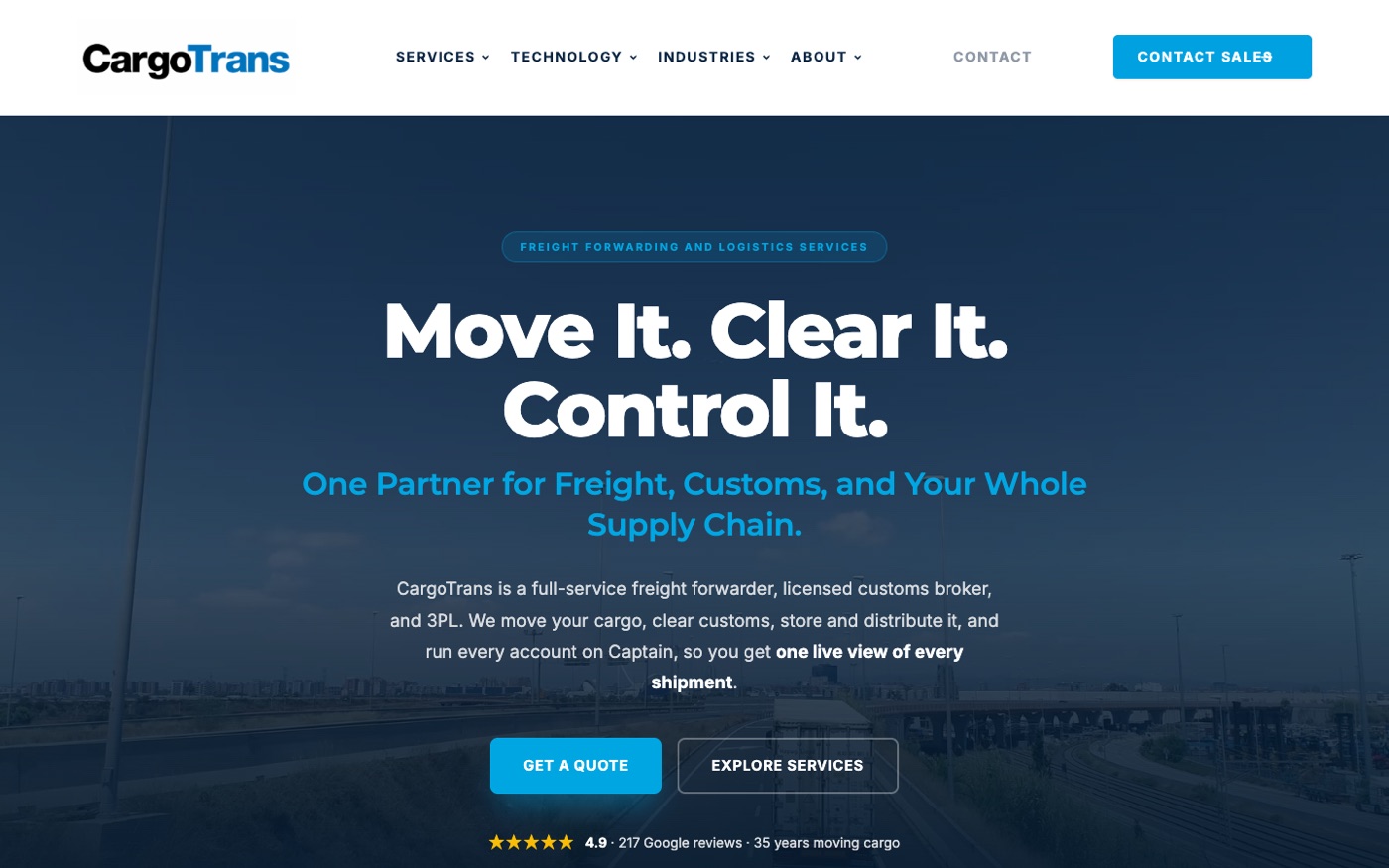 Customs broker & 3PL · New York, since 1989
CargoTrans
“They understand tariffs and trade compliance well enough to write about it; we only need to correct small details.”
Anthony DeFilippis, Co-CEO -
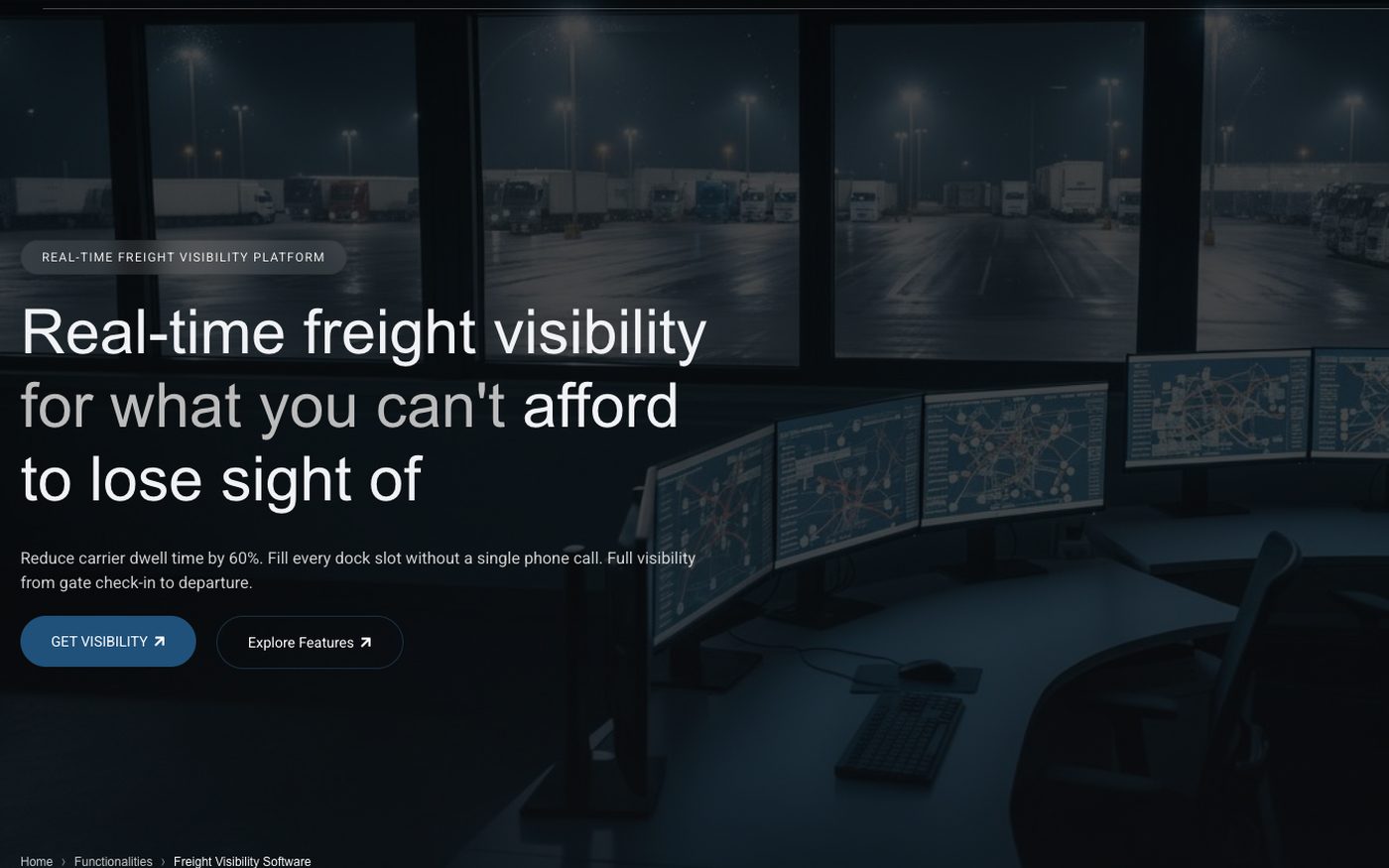 Freight management platform · UK
Trucks on the Map
A strong product with no website behind it. Built from zero around the four problems a transport planner has, with demo booking as the goal.
-
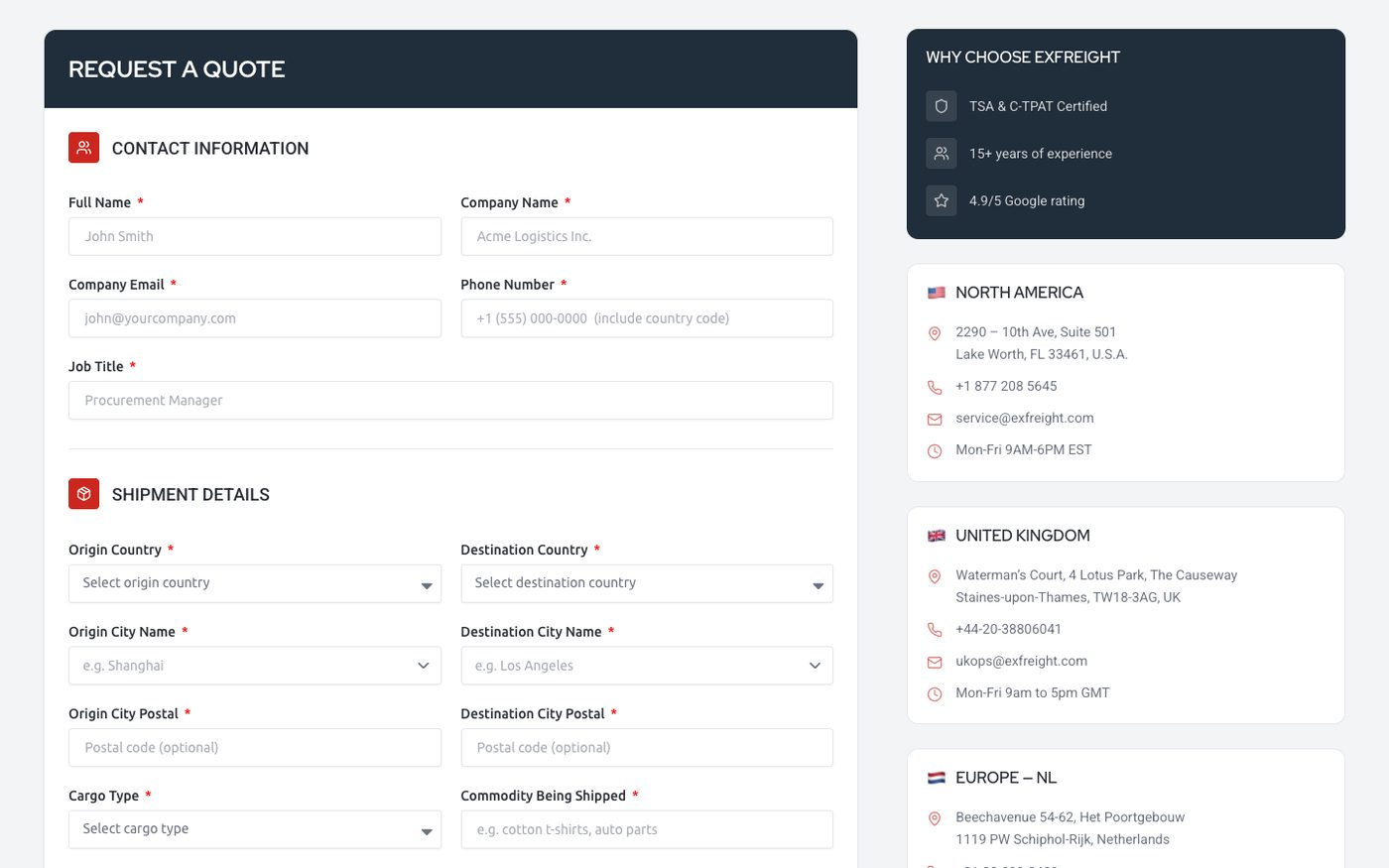 Freight forwarder · Florida
ExFreight
A site broken by a failed update. Rebuilt with plain-language service pages, a one-minute quote flow and every RFQ tracked.
Learn more
Related insights and resources
More on marketing for customs brokers, content marketing for logistics, email marketing and lead nurturing.


More industries
Other logistics companies we market






FAQ
Questions about customs brokers marketing
How do customs brokers get new clients?
+
How do customs brokers get new clients?
+Through referrals from forwarders and importers, and increasingly through search and AI answers when regulations change. The firms that grow publish clear guidance quickly, show their licensed expertise and contact importers affected by a change. See our guide to marketing for customs brokers.
What is the fastest way for a customs broker to get clients?
+
What is the fastest way for a customs broker to get clients?
+Act on a rule change. When a new tariff or rule lands, importers look for answers within days. A clear explainer published fast, search ads on the affected terms and outbound to importers of the affected products bring conversations quickly, from people with a real problem to solve.
Can AI assistants cite our customs brokerage?
+
Can AI assistants cite our customs brokerage?
+Yes, if your guidance is accurate, clearly structured and published early. Assistants cite sources that answer the question directly. We write answer-first explainers reviewed by your licensed brokers and track how often ChatGPT, Perplexity, Gemini and Claude mention or cite your firm. More in GEO for logistics.
Who writes the regulatory content?
+
Who writes the regulatory content?
+We draft, your licensed brokers review. We understand tariffs, classification and trade compliance well enough to write about them, and a licensed broker signs off on every page before it goes live. That keeps content fast and correct.
Can you publish fast when tariffs change?
+
Can you publish fast when tariffs change?
+Yes. We keep templates and a review path ready, so an explainer can go live within days of an announcement, while searches peak. Speed matters: the first clear answer is often the one that gets cited.
Is there a shortage of customs brokers?
+
Is there a shortage of customs brokers?
+Demand for licensed brokers has grown with tariff changes and new compliance rules, and many importers struggle to get timely answers. That gap is a marketing opportunity: a firm that explains changes clearly and responds quickly stands out from the ones that only appear in directories.
Do you work with brokers that also forward freight?
+
Do you work with brokers that also forward freight?
+Yes. Many of our logistics clients combine customs brokerage and forwarding. We build the customs content as the entry point and connect it to forwarding services, so an importer who arrives with a customs question can become a freight client.
Do you work with trade compliance consultants?
+
Do you work with trade compliance consultants?
+Yes. Compliance consultants sell expertise on classification, audits and programs such as drawback or trusted trader status. The same approach applies: accurate content, visible credentials and outreach to importers when a rule affects them.
Get in touch
Talk to us about your importers
Tell us what you sell and who buys it. We will tell you, honestly, whether this is the right channel for you and what it would take.
- 1 We reply within one business day, from a person, not a sequence.
- 2 A 30-minute call on what you sell, to whom, and how you close today.
- 3 If we can build demand for it, we say what it would take. If not, we say that too.
Prefer to talk now? Pick a 30-minute slot or write to hi@f5-out.io.